Herculaneum
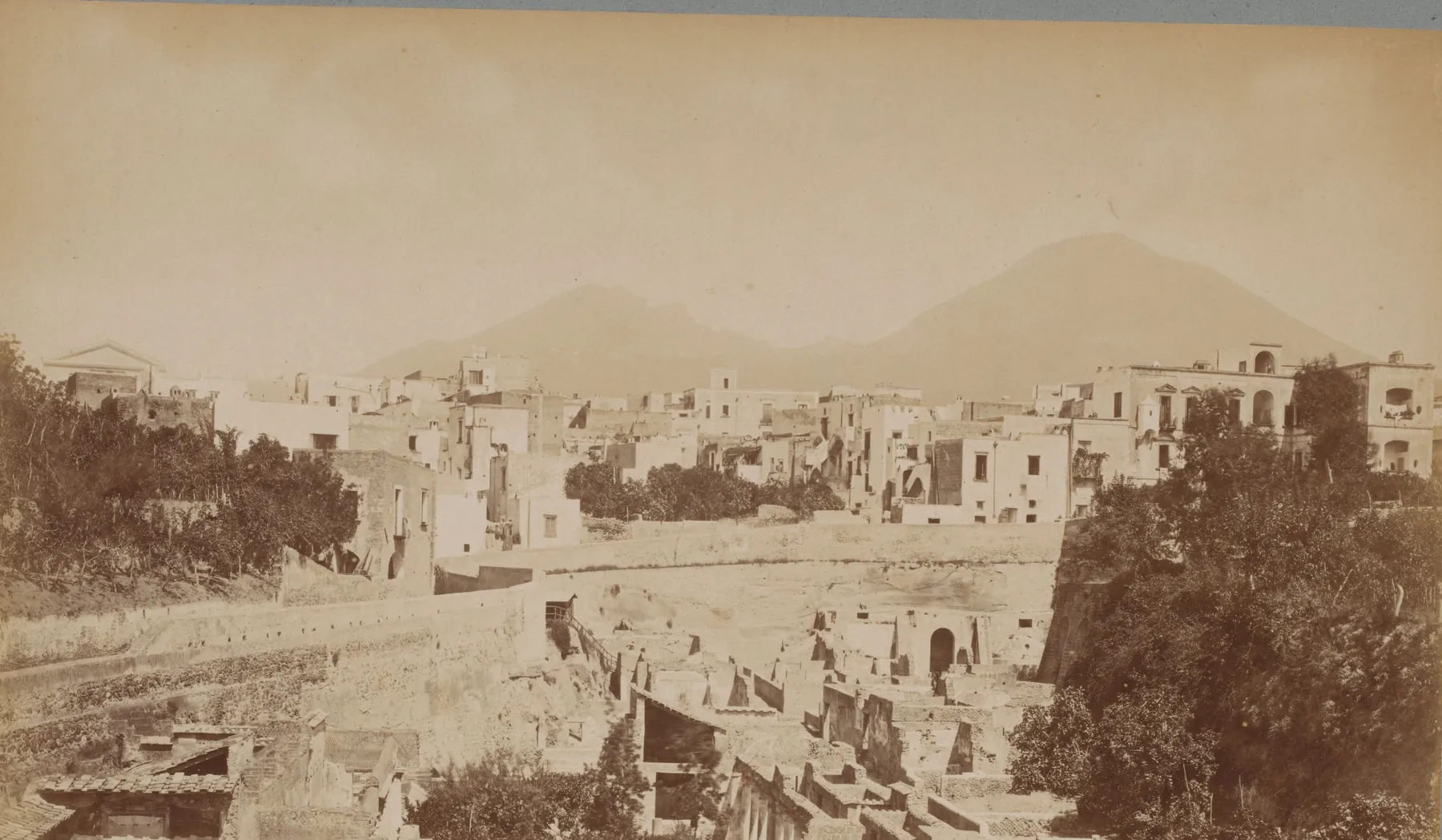
A seaside town at the foot of Vesuvius, on the Bay of Naples; today Ercolano. Strabo, who wrote before the eruption, describes it as a fortress on a promontory jutting into the sea, a very healthy spot thanks to the winds, held in turn by the Oscans, the Tyrrhenians and Pelasgians, and then the Samnites. In AD 79 the wind carried the pumice elsewhere, so Herculaneum was destroyed by night-time avalanches of hot gas and ash. The inhabitants took shelter in the boat chambers by the beach, most likely waiting for ships that never came. Several hundred skeletons were found on the beach. Excavations began here in 1738 on the orders of the King of Naples, ten years earlier than at Pompeii. The place appears in the Titus episode, in the chapter “Cities Under Ash”.
Related
Articles
Sources
- Image: Vosmaer, c. 1870, Rijksmuseum, CC0