Domitian (reigned AD 81–96)
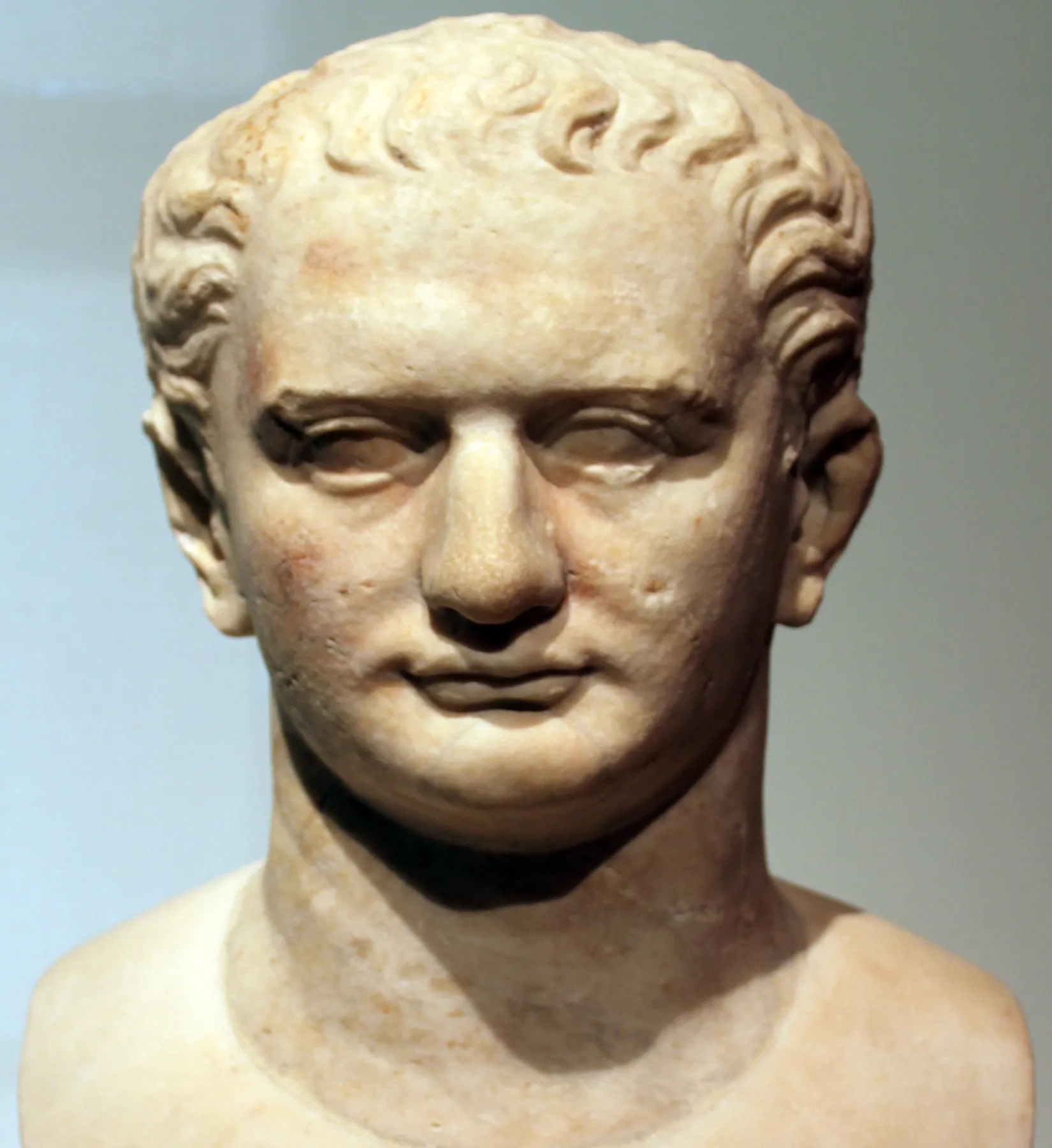
For eleven years he stood in the shadow of his father and brother. After Titus’s death in AD 81 he took power and ruled for fifteen years — the longest since Tiberius. Suetonius admits that he judged conscientiously and kept an eye on officials. He rebuilt the Capitol, built a stadium and a new palace on the Palatine, and raised soldiers’ pay by a third.
At court and in writing he was addressed as “lord and god.” He personally led an expedition against the Chatti, and his generals fought in Britain and on the Danube; he made peace with the Dacian king Decebalus, paying him with money and craftsmen. After the revolt in Germania in AD 89 he feared conspiracies more and more: trials of senators, the banishment of philosophers, and in AD 95 the execution of his cousin Flavius Clemens.
On September 18, AD 96, he was killed in his bedroom by men of his own palace. The Senate ordered his name chiseled from inscriptions. The soldiers wanted to deify him. Nerva became emperor. The image of a tyrant comes from senators who wrote after his death; scholars judge him more mildly.
Related
People
- Vespasian (reigned AD 69–79)
- Flavia Domitilla (Vespasian’s wife) (died before AD 69)
- Titus (lived AD 39–81; emperor 79–81)
- Domitia Longina (empress AD 81–96)
Articles
- He Regretted One Thing — Titus: A Cloud Like a Pine Tree
- The Black Banquet — Domitian: Lord and God
- The Younger Brother — Domitian: Lord and God
- Lord and God — Domitian: Lord and God
- The Frontiers — Domitian: Lord and God
- Gleaming Walls — Domitian: Lord and God
- The Fifth Hour — Domitian: Lord and God
- Erased — Domitian: Lord and God
- The Emperor from Egypt — Vespasian: Money Doesn’t Stink
- The Dagger No One Wanted — AD 69 II: The Capitol in Flames
- The Gemonian Stairs — AD 69 II: The Capitol in Flames
